
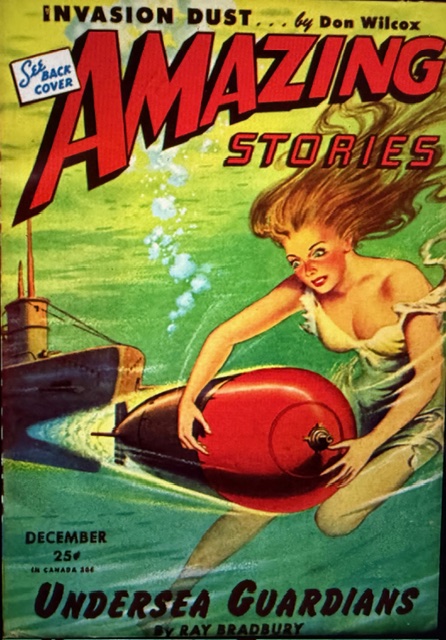

Ray Bradbury was not just a highly motivated and prolific science fiction writer. He was also a ferocious reviser. He said, “When you write – explode – fly apart – disintegrate! Then give yourself enough time to think, cut, rework, and rewrite.” If and when he did show his work to others before publication, he had already logged double-digit revisions.
However, some of us earthling writers need support and encouragement along the road to a finished product. There are those writers who show their manuscript to no one until they think it’s ready for publication, but I think that’s rare and unnecessary. When I’m in the revision stage, I like a nudge now and then from a carefully chosen reader who will be honest enough to say what they think. If they have no sense of what I’m trying to say, or they lose interest after the first paragraph, or they just couldn’t figure out what my characters were trying to do — this is important information. This response from a reader usually happens when I’m not clear about what I’m trying to say and I’ve wandered off into a thicket of ideas.
My reader is not going to tell me step-by-step what to do or how to find my way, however. They might offer a clue or notice that there is too much of one thing and not enough of something else. Perhaps I won’t agree with my helpful reader – but I was the one who asked! Now I must decide if and how I’ll revise.
Something mysterious can happen, though, when a friend asks me to read their work. Suddenly, in spite of having critiqued many manuscripts, I may doubt my ability to be clear and worry that I might not have anything useful to say. This usually happens when I’m asked to read something in a different genre. (Please don’t ask me to read science fiction! I spend most of my time reading nonfiction.) What if I’m too critical? What if I don’t like it?!! Will I be un-friended and crossed off the dinner invitation list when I hand over my feedback? This is when I stop and remind myself that the first rule of critiquing the work of someone else is to approach with solid questions and good will. My questions have changed over the course of years of reading, but here are some of the latest:
- What is the major theme of the story or essay?
- Were there any places along the way that seemed like distractions from the theme? Was it okay to be distracted?
- Was I curious to read more after the first sentence? The first paragraph? The first page? Why?
- How is the writer using scenes, exposition and dialogue to tell the story?
- How is the pace and flow of the story relative to the theme?
- Where in the story do I feel the writer’s strengths?
- How did I feel after I finished reading?
About the timing of asking for feedback, I recommend working through several drafts before requesting a read-through by a friend — and don’t be surprised if even a practiced reader thinks that it might be a first draft.
One of the great luxuries during my graduate program in nonfiction writing was having a different mentor each semester, each with their own style of critique. Some gave general comments and some line edits, but each glance offered nourishment – a different view – along the path to deepening my awareness of what and how I was writing. Perhaps the most helpful of all the comments I’ve ever received was when a reader said, “You don’t seem to be having any fun with this story.”
Ray Bradbury was right about some things; explode on the page first, take risks, and revise. But after that, if you feel the need, ask a friend, especially someone who reads your genre of writing, for feedback. You may find out that you could be enjoying yourself more.


0 Comments